For Singapore employers researching “SkillsFuture Enterprise Credit corporate language training,” the first step is to separate two questions: what communication skills does your team need, and does a particular course meet the current requirements for using the credit? A course that suits your employees is not automatically eligible, so check both the learning fit and the latest programme requirements before making a decision.
Start with the tasks your team needs to do better. A clear goal, such as contributing to meetings, speaking with customers or writing professional emails, gives training a practical focus. It also helps you compare providers and check whether their teaching approach fits employees’ needs.
This guide explains how to turn workplace communication needs into focused learning objectives, compare delivery formats and evaluate providers consistently. It also covers what to verify before relying on SkillsFuture Enterprise Credit for a corporate language course. Learning Explorer offers customised corporate training in English, Mandarin, Japanese, Korean, Spanish, Thai and Vietnamese, with private, group and intensive formats to consider. Confirm course arrangements and any credit-related eligibility directly before proceeding.
Key Takeaways
- Pinpoint the workplace communication tasks employees need to handle, then use them to shape relevant learning goals.
- Gather employee and manager input before choosing course content, learner levels or a training format.
- Compare private, group and intensive options against your team’s needs, schedules and preferred learning environment.
- Before relying on SkillsFuture Enterprise Credit, verify current employer, course and claim requirements through official programme information and with the provider.
- Use a consistent provider checklist to assess curriculum customisation, instructor background, location and how progress will be reviewed.
Why corporate language training in Singapore starts with workplace needs
Corporate language training is structured learning designed around the communication tasks employees need to perform. It might help a team contribute to meetings, respond to clients, write clearer messages or collaborate with colleagues across regional offices. The aim is not to teach a language in the abstract, but to build skills employees can practise in situations that matter to their roles.
Singapore’s linguistic environment is one reason to start with the work itself. English, Mandarin, Malay and Tamil are the country’s official languages, as outlined in this overview of the official languages in Singapore. But an organisation-wide goal, such as improving regional communication, does not show which employees need what support. A sales team speaking with Mandarin-speaking customers may need different practice from colleagues writing updates to Japanese-speaking partners.
Define the broader business priority, then identify the teams and tasks connected to it. Not every employee needs the same language training, and not every communication challenge calls for a course. A specific need should guide the choice of language, learning goals and format.
Which workplace communication tasks reveal a training need?
Look for recurring moments when employees hesitate, ask a colleague to step in or struggle to make a message clear. Ask employees and managers what feels challenging, and consider customer-facing, internal and cross-border interactions. Then turn broad concerns into observable tasks: opening a client call, asking a follow-up question in a meeting, explaining a service or writing a concise email. These tasks give learners something practical to rehearse.
How can employers prioritise languages and teams?
Compare business priorities with employees’ actual communication responsibilities. If a team regularly engages with Japanese-speaking clients, Japanese may be relevant. If employees need to handle customer conversations in English or Mandarin, those needs deserve attention too. Korean, Spanish, Thai and Vietnamese may also be worth considering where work calls for them. Avoid choosing a language just because it is popular or prestigious. Ask who will use it, in which situations and what they need to communicate more effectively.
This needs-first approach gives employers a clearer starting point. It helps distinguish a workplace requirement from a general interest in language learning, so course content can focus on relevant employee tasks.
How to build a corporate language-training plan step by step
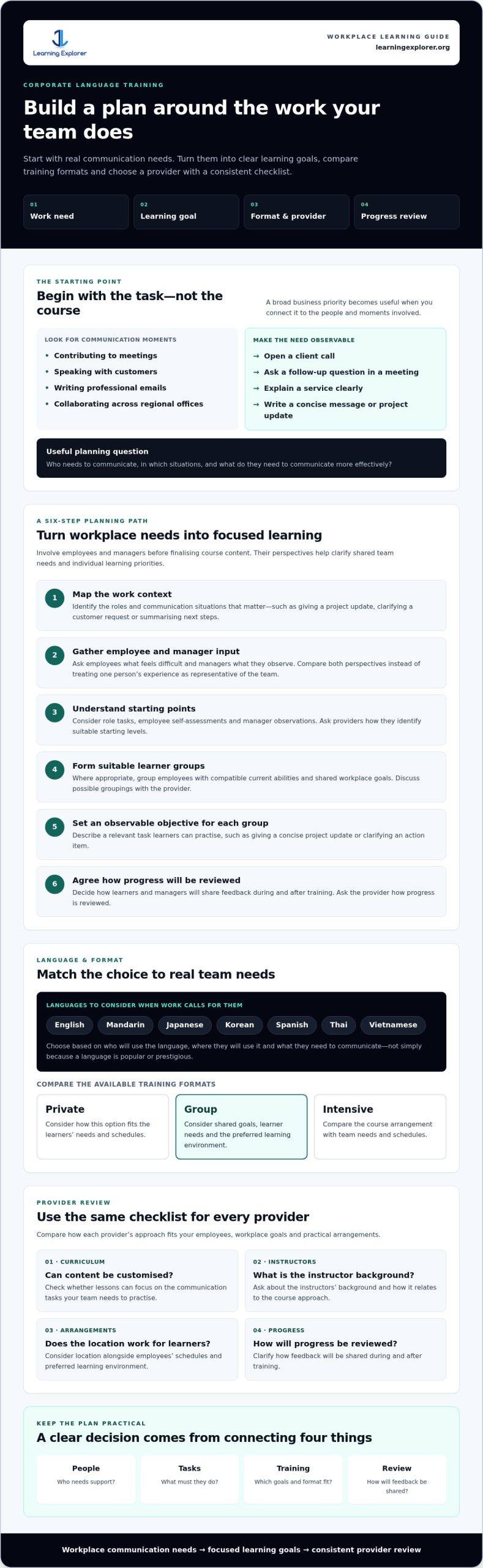
A focused plan turns workplace communication needs into learning employees can apply. Build it in stages, involving employees and managers before settling course content. Their input can help distinguish a shared team priority from individual learning needs.
- Map the work context. Note the roles involved and the communication situations that matter, such as giving a project update, clarifying a customer request or summarising next steps after a discussion.
- Gather employee and manager input. Ask employees what they find difficult and managers what they observe. Compare their perspectives to clarify the need, rather than treating one person’s experience as representative of the whole team.
- Understand starting points. Consider role tasks, employee self-assessments and manager observations. Ask providers how they identify suitable starting levels before grouping participants. Confirm their approach directly instead of assuming they use a particular assessment tool.
- Form suitable learner groups. Where appropriate, group employees with compatible current abilities and shared workplace goals. Discuss proposed groupings with the provider, since the right arrangement depends on learners’ needs and course options.
- Set an observable objective for each group. Describe a communication task learners can practise, such as giving a concise project update or clarifying an action item. Keep the objective relevant to their responsibilities.
- Agree how progress will be reviewed. Decide how learners and managers will share feedback during and after training. Ask the provider what progress information it can offer, then use confirmed details to plan the review.
How should employers assess employee language needs?
Bring together three perspectives: the communication tasks employees handle, their own view of where they need support and managers’ observations of work interactions. Look for differences within a team as well as shared needs. Before confirming learner groups, ask the provider how it determines suitable starting levels and whether its process can help inform grouping. Do not assume a specific tool or assessment method.
How do you turn needs into learning objectives?
Write an objective that learners and managers can discuss using examples from work. For example: “Practise summarising project decisions and confirming the next action in a team discussion.” This is clearer than a general aim to improve language ability because it identifies a task employees can rehearse. Share each group’s objective with the provider so it can inform a discussion about course content.
Learning Explorer offers customised corporate training and private, group and intensive formats. Once you have outlined the team’s needs and objectives, explore corporate language training options and confirm which arrangements may suit your learners.
Compare corporate language-training formats and providers fairly
A fair comparison starts with your team’s learning objective, not a provider’s format label. Ask the same questions about each option: Does the content reflect relevant workplace tasks? Can learners be grouped appropriately? Where will sessions take place? How will feedback be shared? This makes practical differences easier to spot without assuming a format guarantees a particular result.
| Format | May be worth considering when | Confirm with the provider |
|---|---|---|
| Private | An employee has distinct communication goals or would benefit from an individual learning arrangement. | Whether this format is available for the language and learning needs in question, and how the course can reflect relevant work tasks. |
| Group | Employees share suitable starting levels and workplace objectives, such as practising customer conversations or meeting participation. | How learners are grouped, whether the curriculum can address their shared scenarios, and what arrangements are available. |
| Intensive | The organisation is considering a concentrated learning format and employees can sustain the proposed pace alongside their work. | The schedule, course structure, preparation expectations and how learners can apply practice between sessions. |
These are planning considerations, not promises about outcomes or availability. Learning Explorer offers private, group and intensive formats, but confirm current options for your chosen language and team before comparing providers.
When might private, group or intensive classes fit?
Consider private learning if one employee’s goals differ from the rest of the team, subject to provider availability. Group learning may fit when participants share suitable starting levels and practical objectives. For intensive learning, look closely at the proposed pace and employees’ schedules. Ask whether the arrangement leaves enough room for preparation and workplace practice.
What should an employer ask a language-training provider?
Ask how lessons can reflect specific roles and communication scenarios, such as responding to a client query or contributing to a project meeting. Clarify the instructor’s background, course structure, learning materials and feedback arrangements. Then confirm details that can affect participation, including language and format availability, schedule and location. If training at your workplace matters, ask directly whether that option is offered rather than assuming it is.
Learning Explorer describes its instructors as bilingual native speakers and offers customised corporate training in English, Mandarin, Japanese, Korean, Spanish, Thai and Vietnamese. Use those details as a starting point, then verify the fit for your employees’ objectives and logistics. A consistent set of questions helps you compare providers on relevant learning, workable arrangements and clear communication about progress.
SkillsFuture Enterprise Credit corporate language training: what to check
If you are considering SkillsFuture Enterprise Credit for corporate language training, do not assume that a course is eligible because it is relevant to your business or offered by a language school. Eligibility and claim requirements can depend on current programme rules and the specific course. Verify the latest requirements through official SkillsFuture Singapore information, and ask the provider what it can confirm about the course.
Before making a decision, check these points:
- Employer eligibility: Confirm that your organisation meets the current requirements for using the credit.
- Course eligibility: Check whether the specific course and provider meet the applicable requirements. Do not rely on a general description of corporate training as proof.
- Claim process: Confirm what steps, records and timing apply before you enrol or commit to a course.
- Course fit: Assess the curriculum, format, schedule and learning objectives separately from credit eligibility. A course still needs to meet your team’s communication needs.
- Costs and arrangements: Ask the provider to explain the course fees and any registration or materials charges, then check which amounts, if any, are covered under current programme rules.
Learning Explorer offers customised corporate language training, but employers should confirm directly whether a particular course meets current credit requirements. Verify programme rules independently before relying on the credit in a budget or training plan. If eligibility is unclear, resolve that question before treating the credit as available funding.
How to organise training, support participation and review progress
A well-chosen course still needs room in employees’ working lives. Before confirming arrangements, compare the proposed class timing and format with team responsibilities, workload patterns and the communication tasks learners need to practise. Make the purpose clear: explain how the training connects to employees’ roles and what opportunities they will have to apply new language skills at work.
Ask learners what might make participation difficult. Conflicting duties, unclear expectations or limited chances to practise can affect engagement. Where possible, address practical barriers with managers before training begins. Agree on attendance expectations, any preparation learners should complete and how managers can encourage relevant workplace practice without turning every interaction into a test.
How can employers make training easier to attend?
Discuss the proposed schedule and format with affected employees before finalising them. Invite learners to flag practical constraints, then see what can be adjusted. Share simple ways to practise between lessons, such as preparing a meeting contribution or drafting a work-related message. Manager support matters too: allow employees to participate as planned and look for natural opportunities to use what they are learning.
How should employers evaluate learning progress?
Return to the original objectives with learners and relevant managers. Use practice examples, such as whether an employee can rehearse a meeting update or draft a clearer message for a familiar work situation. Treat these examples as discussion points, not proof of a guaranteed result. Ask the provider what feedback or progress information it can share, and agree how learners and managers will communicate during the course.
Keep the review flexible: revisit objectives during the course, discuss practice examples and feedback, then consider what should come next. There is no need to impose a measurement schedule before confirming what suits the programme. If learners find a task is still challenging, refine the practice focus. If group needs differ, discuss whether objectives, grouping or course content should be adjusted.
Keep the review connected to the work. Attendance can show whether employees took part, but it does not show whether the learning addressed the original communication need. A short, specific conversation about a real workplace task can help identify useful next steps without assuming a particular provider reporting method.
If you are planning customised corporate language training, discuss a workplace-focused training plan with Learning Explorer.
Choose a Singapore language-training partner and take the next step
Before selecting a provider, bring the decisions from your planning process into one clear checklist. Identify the workplace communication need, who will be learning, the format to explore, the objectives for each learner group and how you will review progress. If you are considering SkillsFuture Enterprise Credit, include a separate check of current employer, course and claim requirements. This gives providers useful context and helps your team compare options against the same priorities.
Learning Explorer is a Singapore language-school group offering customised corporate training. Its language programmes include English, Mandarin, Japanese, Korean, Spanish, Thai and Vietnamese, with private, group and intensive formats to consider. The most suitable options depend on your employees’ needs, schedules and course requirements, so confirm current availability and arrangements with the school.
What should a corporate training enquiry include?
Make your enquiry specific enough to support a useful conversation. Describe the team, the communication tasks employees need to practise and the languages you are considering. Share relevant schedule constraints and preferred formats, while making clear that these are preferences rather than confirmed arrangements. Ask what course details, starting-level assessment and progress feedback the provider can confirm before you proceed.
You can also outline one practical objective, such as helping a customer-facing team practise opening and guiding a conversation in Mandarin. That gives the provider a concrete example to discuss when considering how training might reflect employees’ work.
How can Learning Explorer support a considered decision?
Learning Explorer’s customised corporate training offers a starting point for discussing how workplace needs could inform a structured learning plan. Ask about suitable course options, relevant formats and the information available to help you decide. Confirm logistics directly, including whether training takes place at the school or another location. The training centre is at 10 Anson Road, Level 22, International Plaza, Singapore 079903, above Tanjong Pagar MRT.
Share your team’s communication needs with Learning Explorer and ask which language-course options may fit. If you are considering SkillsFuture Enterprise Credit, verify current requirements separately before relying on it. A focused enquiry can help move from a broad training idea to a clearer discussion about learners, objectives and practical arrangements.
Turn workplace communication needs into a clear next step
Effective corporate language training starts with real work: identify the communication tasks employees need to practise, then set focused objectives for each learner group. Compare providers and formats against those needs, and review progress through practical examples and regular feedback, not attendance alone. If using SkillsFuture Enterprise Credit is part of your plan, verify current eligibility and claim requirements before committing to a course.
Learning Explorer offers customised corporate training in English, Mandarin, Japanese, Korean, Spanish, Thai and Vietnamese. The school describes its instructors as certified native speakers who are bilingual. Ask which course options and arrangements fit your team, and confirm current availability as you plan.
You do not need every detail settled before starting a conversation. Share the roles involved, the workplace situations employees want to handle more confidently, and any schedule or format preferences. Discuss your team’s language-training needs with Learning Explorer and take a considered first step toward learning that connects with everyday work.
Frequently Asked Questions
What is corporate language training?
Corporate language training is structured language learning planned around employees’ workplace communication needs. Unlike informal self-study, it gives an organisation a way to connect course content and format with specific roles and tasks, though self-study can still support practice between lessons. Start by identifying the teams involved and recurring situations, such as client conversations, meetings or written updates. The right learning plan depends on those needs.
How do I choose a language course for my employees?
Start with the communication tasks employees need to perform, then consider their current language levels and suitable learning objectives. Compare providers based on curriculum customisation, instructor background, class format, schedule and available progress feedback. For example, employees who need to contribute to client meetings may need different practice from those writing workplace messages. Ask providers to confirm current course availability and delivery details before deciding. No single language or format suits every team.
Can corporate language training be customised for different teams?
Yes. Learning Explorer offers customised corporate training, but employers should confirm the available scope directly with the provider. Describe each team’s roles and communication scenarios, and share what is known about learners’ starting points. A client-facing team and a regional project team may have different objectives or need different formats. Ask which course details can be adapted, and confirm any assessment, location or feedback arrangements rather than assuming they are included.
Which languages can Singapore employers consider for workplace training?
Choose languages based on employees’ real communication responsibilities and the organisation’s priorities, rather than trends or assumptions. Learning Explorer lists English, Mandarin, Japanese, Korean, Spanish, Thai and Vietnamese among its course offerings. A team’s regular client conversations or regional collaboration may help clarify which language is relevant. Confirm current availability for corporate courses with the provider, then discuss how the learning plan could connect with practical workplace situations.
How can employers measure whether language training is useful?
Revisit the learning objectives agreed before training and discuss examples of communication practice linked to employees’ roles. For instance, learners and managers might reflect on practising a meeting contribution or preparing a work-related message. Gather feedback from both groups, and distinguish attendance from demonstrated practice. There is no single measurement approach to assume; agree on an evaluation method that reflects your organisation’s goals and the feedback or progress information the provider confirms it can share.
Is group or private language training better for employees?
Neither format is automatically better. Suitability depends on learners’ needs, starting levels, shared objectives and schedules. Group classes may fit employees with compatible learning goals, while private lessons may suit an individual with distinct needs, subject to availability. Learning Explorer also offers intensive classes. Compare the options with the provider and confirm course arrangements for your team before choosing. Consider whether learners can sustain the schedule and practise relevant communication between lessons.
How should a company prepare before contacting a language-training provider?
Prepare a short overview of the employee group, workplace communication tasks, languages under consideration and schedule constraints. Note any preferred formats and learning objectives you hope to explore, but you do not need to settle every course detail in advance. Bring questions about course structure, instructor background, curriculum customisation and feedback. If considering SkillsFuture Enterprise Credit, also prepare to verify current eligibility and claim requirements through official programme information. This context helps a provider discuss relevant possibilities and clarify which options and arrangements are currently available for your team.