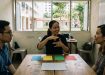
A screen doesn’t have to make learning Korean feel distant. A Korean online class can bring live instruction and speaking practice into your home, with a webcam helping you see your instructor’s expressions and join face-to-face activities. A fast, stable internet connection supports smoother lessons; Sejong advises students to have one for online classes.
If you’re balancing work, family, and other commitments, it’s reasonable to wonder whether online lessons can keep you engaged and give you enough chances to speak. They can focus on active practice, not just listening, with activities that build pronunciation, vocabulary, reading, writing, and conversation step by step.
Here, you’ll learn what live online Korean classes for adults can involve, what to prepare for webcam and internet use, and how lessons can develop core language skills. You’ll also learn what to consider when choosing a format, so you can approach your first class with greater confidence.
Key Takeaways
- Live online lessons can combine instructor guidance, speaking practice and visual interaction, with a webcam helping you take part face to face.
- Build Korean skills together: speaking, listening, reading and writing each support practical communication.
- A fast, stable internet connection can help lessons run more smoothly; prepare your device and learning space before class.
- Consider how live instruction, lesson structure and your learning goals fit your routine when choosing an online class format.
- A conversational course can suit adults who want to develop confidence using Korean in everyday interactions.
Online class format and webcam requirement
A Korean online class can be live, self-paced, or a blend of both. Live lessons let students interact with an instructor in real time. Self-paced materials allow learners to review vocabulary and grammar independently. A blended format combines scheduled teaching with practice between sessions. For example, a live lesson might introduce greetings, followed by short listening practice to do later.
In a live online group class, students join from different locations and take turns speaking. The instructor can guide pronunciation, model a dialogue, and invite each learner to respond. A webcam makes facial expressions and mouth movements visible, which can help demonstrate sounds. It also lets students see one another during pair activities. Whether cameras are required depends on the class arrangement.
In-person group classes bring students and instructors together in a classroom. Learners can practise a dialogue face to face, then receive immediate spoken feedback. Online groups work differently: participants connect remotely, and the instructor manages turn-taking through the lesson platform. Both formats can include explanations, guided exercises, and conversation practice. The key difference is where interaction happens, not whether students practise speaking.
Placement can help match lesson content to a learner’s current level. The Korean placement test has two papers. Paper 1 is scored out of 120, and students scoring above 96 on Paper 1 proceed to Paper 2. These thresholds indicate a step-by-step assessment process. They do not describe webcam rules or determine whether lessons are online or in person.
Before a live class, prepare a device with a working camera and position it at eye level. Check that your face and mouth are visible. Choose a quiet spot, keep your Korean notes nearby, and close unrelated tabs. If the camera stops working, use the class chat to tell the instructor and follow the lesson’s audio instructions. These simple steps help prevent disruption during speaking practice.
- For pronunciation: Watch the instructor’s mouth, then repeat a short Korean phrase.
- For group practice: Keep your microphone muted while listening, then unmute when invited to speak.
- For camera comfort: Adjust framing before class and use the platform’s camera controls as needed.
Choose the format that suits your schedule and preferred way of practising. A live group class offers real-time interaction, while self-paced study gives you more control over review. When comparing options, look for a clear balance of instructor guidance, speaking turns, and independent practice. That structure helps make each session purposeful, whether you’re learning your first Korean phrases or working at an advanced level.
Speaking, listening, reading and writing development
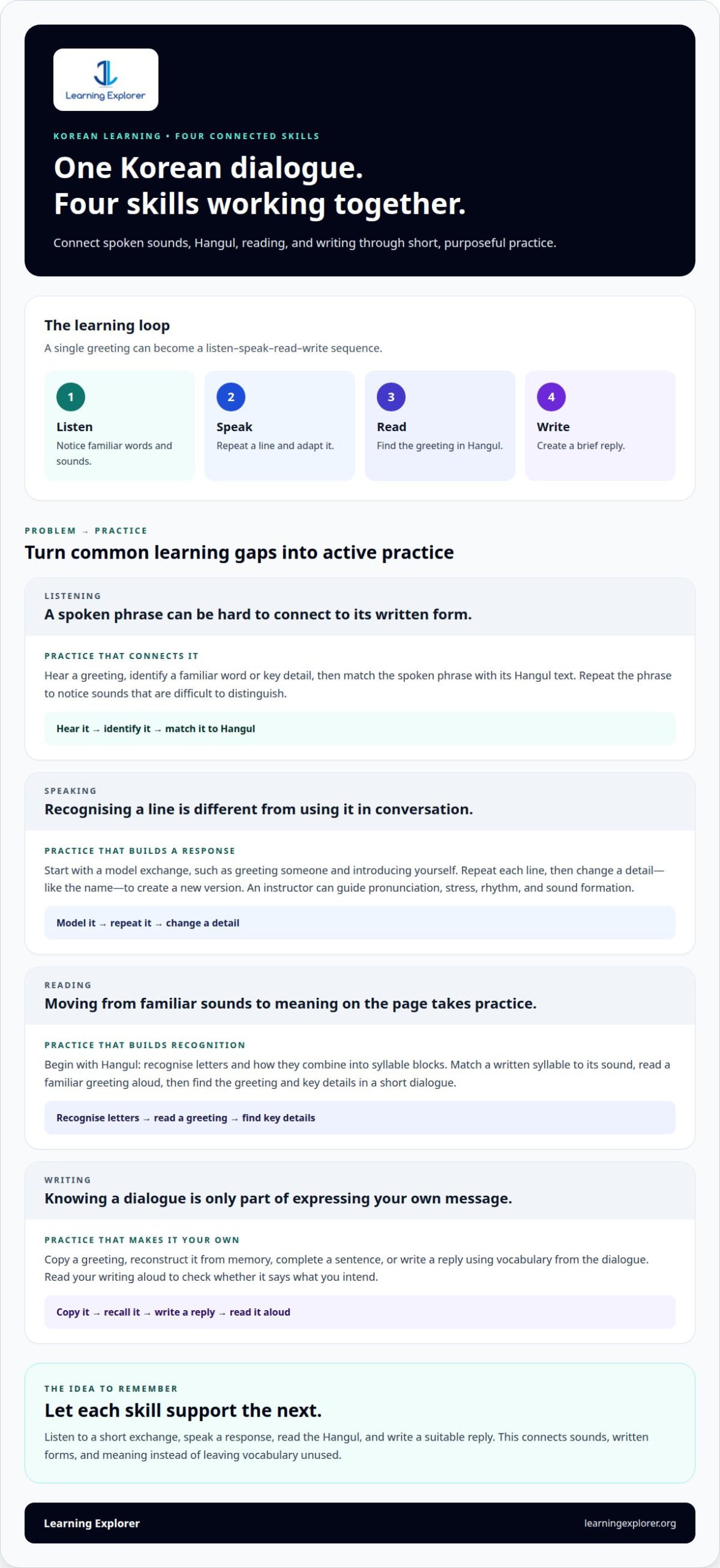
Effective Korean learning connects four skills instead of treating them as separate subjects. A lesson might introduce a short dialogue, ask students to listen for familiar words, then practise speaking the lines. Reading the dialogue and writing a reply reinforce the same vocabulary. This cycle helps learners connect sounds, written forms, and meaning.
Reading and writing often begin with Hangul, the Korean alphabet. Students learn to recognise its letters and how they combine into syllable blocks. A practical first exercise is to match a written syllable to its sound, then read a familiar greeting aloud. Writing practice can follow: copy the greeting, reconstruct it from memory, and use it in a short exchange.
Listening tasks help learners notice meaning in spoken Korean. An instructor might say a greeting, a name, or a simple request, then ask students to identify the key information. Repeating the recording or spoken phrase can reveal which sounds are difficult to distinguish. Learners can then connect what they heard with the matching Hangul text.
Speaking practice turns recognition into active communication. Start with a model exchange, such as greeting someone and introducing yourself. Repeat each line, then change a detail, such as the name, to create a new version. An instructor can guide pronunciation and help learners adjust stress, rhythm, and sound formation. Short, purposeful turns also give quieter students a clear way to participate.
Reading activities can progress from familiar words to short messages. For example, students might read a brief introduction and identify the person’s name or greeting. Writing can use the same material: complete a sentence, write a reply, then read it aloud. Connecting reading and writing gives learners a chance to check whether their message says what they intend.
- Listen: Identify a familiar word in a spoken greeting before checking its written form.
- Speak: Repeat the greeting, then adapt it for a new conversation partner.
- Read: Find the greeting and key details in a short Hangul dialogue.
- Write: Create a brief reply using vocabulary from that dialogue.
As learners advance, tasks can combine skills in more demanding ways. They might listen to a short exchange, summarise its meaning aloud, and write a suitable response. A Conversational Korean Course can give learners a focused context for building practical speaking skills alongside these foundations. Choose activities that make each skill support the next, rather than practising vocabulary without using it.
Technology and internet requirements
Sejong advises students to have a fast and stable internet connection for online classes. A steady connection helps keep spoken instructions and audio exercises clear. If several people share your home network, pause large downloads during class to help reduce interruptions while the teacher explains grammar or models Korean expressions. Test your connection in the room where you plan to study, rather than assuming it works equally well everywhere.
Prepare a computer, tablet, or phone that can run the class platform and display lesson materials. A larger screen can make Hangul text easier to read, while a phone may work for listening and short speaking activities. Use headphones if background noise makes the teacher difficult to hear. Test your microphone by saying a short Korean phrase and checking that the sound is clear. Charge your device or keep it plugged in before class.
For a live lesson, arrange your workspace so you can switch between listening, speaking, and written exercises without searching for materials. Keep the class window visible, place notes within reach, and close apps that send distracting alerts. If sound cuts out, check that the correct audio output is selected. If your microphone stops working, reconnect it or use the device’s built-in microphone while following the lesson.
Textbooks can provide a structured path through vocabulary, grammar explanations, reading passages, and exercises. Students purchase textbooks separately, and free ebooks are available for some books. Before a lesson, open the relevant page or have the printed book ready. For example, if the class covers a dialogue, the teacher can guide students through its vocabulary, then practise the same expressions aloud.
Use digital materials alongside textbook exercises to make review more active. A notes document can collect new Korean words, example sentences, and questions for the next lesson. After class, organise notes by topic, such as greetings, introductions, or grammar patterns. Keep each example short and include its meaning so you can recall how it works. This simple routine makes lesson content easier to revisit between sessions.
- Before class: Open the meeting platform, textbook page and lesson notes.
- During class: Keep audio clear and switch devices or settings if a tool fails.
- After class: Save useful expressions and textbook exercises together for review.
Choose equipment that supports the planned activities, rather than making unnecessary technical upgrades. A reliable device, clear audio, readable materials, and stable internet cover the practical essentials. If you learn Korean through live instruction, these preparations help you focus on the lesson instead of troubleshooting. They also make it easier to follow explanations, respond aloud, and work through grammar examples at a comfortable pace.
Live online Korean classes for adults
Live lessons give adults a scheduled opportunity to use Korean, not just review it alone. Students can hear an instructor model a phrase, respond aloud, and receive guidance during the same session. This real-time exchange suits learners who want structure around work, family commitments, or other regular activities. Its central benefit is active practice: learners use new vocabulary while the teacher guides the conversation.
A useful class moves through connected steps. The instructor might introduce a theme, such as ordering food, then model a short exchange. Students listen, repeat key expressions, and practise the dialogue with a partner. The teacher can adapt prompts as learners respond, helping them move from rehearsed phrases toward more flexible communication. Even a familiar topic can introduce new vocabulary and useful questions.
Adults often have different goals for learning Korean. One learner may want to introduce themselves to Korean-speaking friends, while another wants to follow everyday conversations. Name your goal before you enrol, then use it to focus your practice. For example, a learner preparing for travel can prioritise greetings, directions, and ordering phrases. Someone interested in Korean media may focus more on listening for familiar words and expressions.
Live instruction also creates a rhythm for participation. Students can take turns answering a question, reading a short prompt, or building a dialogue together. A teacher can clarify grammar when it affects meaning, then return the group to speaking practice. This balance matters: long explanations can leave little time for learners to use Korean. Look for lessons that connect explanations with spoken or written activities.
Make each session easier to apply by keeping a short record. Write down new vocabulary, one useful sentence, and a question that came up during class. Use spare minutes between lessons to recall the sentence without looking, then say it aloud. This small routine links class participation with independent review without turning study into a long task.
To get more from a live lesson, set up a simple participation plan:
- Before class: Choose one practical goal, such as asking someone’s name.
- During class: Volunteer an answer and note phrases you want to reuse.
- After class: Practise one dialogue aloud, changing a detail to make it your own.
When comparing live options, consider how learners speak, receive feedback, and revisit lesson content. A class with guided conversation can help adults move beyond memorised vocabulary. Ask yourself whether the topic matches your goals and whether the session gives you a meaningful chance to respond. The best fit is one you can attend consistently and apply outside class, whether your next step is a greeting, a question, or a longer conversation.
What types of online Korean classes are available in Singapore?
Online Korean learning in Singapore can be organised by delivery style, group size, or learning goal. A live group class brings learners together with an instructor for guided practice. A private lesson focuses instruction on one learner’s needs. Self-paced study centres on materials learners use independently. These formats differ in interaction, scheduling, and feedback.
For direct conversation, consider a live class with time for students to speak. A sample lesson might introduce greetings, model a short exchange, and invite each learner to respond. Group discussion gives learners practice hearing different voices and taking turns. Private instruction can give more attention to an individual’s questions, such as how to phrase an introduction naturally. Choose a format that matches the kind of participation you want.
Some online programmes combine live teaching with independent review. For example, a learner might study vocabulary before class, then use those words in a guided conversation. This arrangement can help adults fit practice around work and personal commitments. Self-paced learning offers flexibility, while scheduled sessions provide a regular opportunity to interact. Look at what the lesson actually asks learners to do, rather than choosing by format label alone.
Class goals also vary. A conversational focus suits learners who want to manage everyday exchanges, such as greeting someone, asking a simple question, or introducing themselves. A structured course may put more emphasis on grammar, reading, and writing alongside speaking. A beginner’s class typically starts with foundational phrases and sounds. Learners with prior knowledge may prefer lessons that build on existing vocabulary and support longer conversations.
Before enrolling, compare options with your routine and intended use in mind. Decide whether you want live interaction, independent study, or a mix. Consider how much speaking practice each session includes, whether the level suits your current ability, and how you’ll review between classes. For instance, someone with limited study time may prefer a predictable live session and a short review routine. Someone who prefers flexible study may value materials they can revisit.
- Choose live group learning for instructor-led practice alongside other learners.
- Consider private lessons if individual questions and focused feedback matter most.
- Look at self-paced study if independent review fits your schedule.
- Match the course goal to whether you need everyday conversation or broader language foundations.
There isn’t one format that suits every adult learner. Start with the situations where you want to use Korean, then choose the teaching style that makes practice realistic and consistent. If everyday conversation is your priority, explore conversational Korean learning as a focused next step.
Learning Explorer: Conversational Korean Course
Learning Explorer’s Conversational Korean Course is a natural next step if you want guided practice in everyday Korean conversations. It gives learners a focused way to work toward practical exchanges, such as greetings, introductions, and simple questions. Choose it when you’re ready to move from exploring class formats to developing conversational ability with instructor guidance.
Learning Explorer also offers conversational courses in English and Mandarin, alongside a Business English Course. Choose the Korean course when speaking Korean is your priority, and keep your learning goal specific as you begin. For details about the Conversational Korean Course, contact Learning Explorer.
Make Your Next Step Count
Choosing a Korean online class is an opportunity to turn interest into a learning routine that fits your goals. Before you begin, decide what you most want to do in Korean, such as joining everyday conversations or speaking with greater confidence. A clear purpose can help you stay focused and make each lesson relevant.
Learning Explorer offers a Conversational Korean Course for learners focused on practical communication. It also offers a Conversational English Course, a Business English Course, and a Conversational Mandarin Course. If you’re deciding which language course best matches your next goal, start with the language and situations you want to use it in.
Take the next step at your own pace. Contact Learning Explorer about class options and share what you hope to learn. A thoughtful beginning can make it easier to keep showing up, practise consistently, and build confidence one conversation at a time.
Frequently Asked Questions
What kind of equipment / environment do I need to prepare before attending class?
Set up a device with a camera, microphone, and speakers or headphones, then choose a quiet spot where you can speak comfortably. Keep a notebook and pen nearby for unfamiliar words. Before class, close noisy apps and place your device securely on a desk. Good lighting helps your teacher see you clearly, especially when you’re practising mouth movements or facial expressions.
Which online Korean classes in Singapore are best for beginners?
For a beginner, look for lessons that build foundational language skills and include useful conversation practice. Learning Explorer’s Conversational Korean Course suits learners aiming for everyday communication. Consider whether the lesson content starts at a level you can follow and whether activities give you chances to use new phrases. A clear learning goal, such as introducing yourself, can help guide your choice.
Which Korean online classes offer live lessons with a teacher?
Choose a course that includes online instruction and live teacher interaction. Learning Explorer offers online classes and a Conversational Korean Course. Live lessons let learners ask questions and practise responses with teacher guidance. Before enrolling, consider whether you want direct interaction during class or prefer independent study materials to review on your own.
What are the schedules and class sizes for online Korean courses in Singapore?
Schedules and class sizes depend on the course format. Private lessons focus on an individual learner, while group classes include interaction with other students. Learning Explorer offers flexible learning formats, including private and group classes. Consider how a fixed lesson time fits your weekly routine and whether you prefer individual attention or shared speaking practice.
What should I check before choosing a Korean online course?
Check the course level, teaching format, learning materials, and how lessons connect with your goals. For example, a beginner focused on daily conversation may prioritise guided speaking activities, while a learner strengthening literacy may look for structured reading and writing practice. Learning Explorer’s Korean syllabus and materials are produced by Seoul National University. Compare those details with the situations where you want to use Korean.
What equipment and internet connection are needed for online Korean lessons?
Use a device that can access the lesson platform, with working audio and a microphone for speaking practice. Sejong advises students to have a fast and stable internet connection for online classes. If audio becomes unclear, pause other network-heavy activities and reconnect your headphones or microphone. Keep a phone available as a backup way to access lesson instructions if your main device has a problem.
How do Korean online classes compare with private tutors and language apps?
Live online classes offer real-time instructor guidance and speaking practice, while self-paced materials let learners review independently; blended formats combine both.