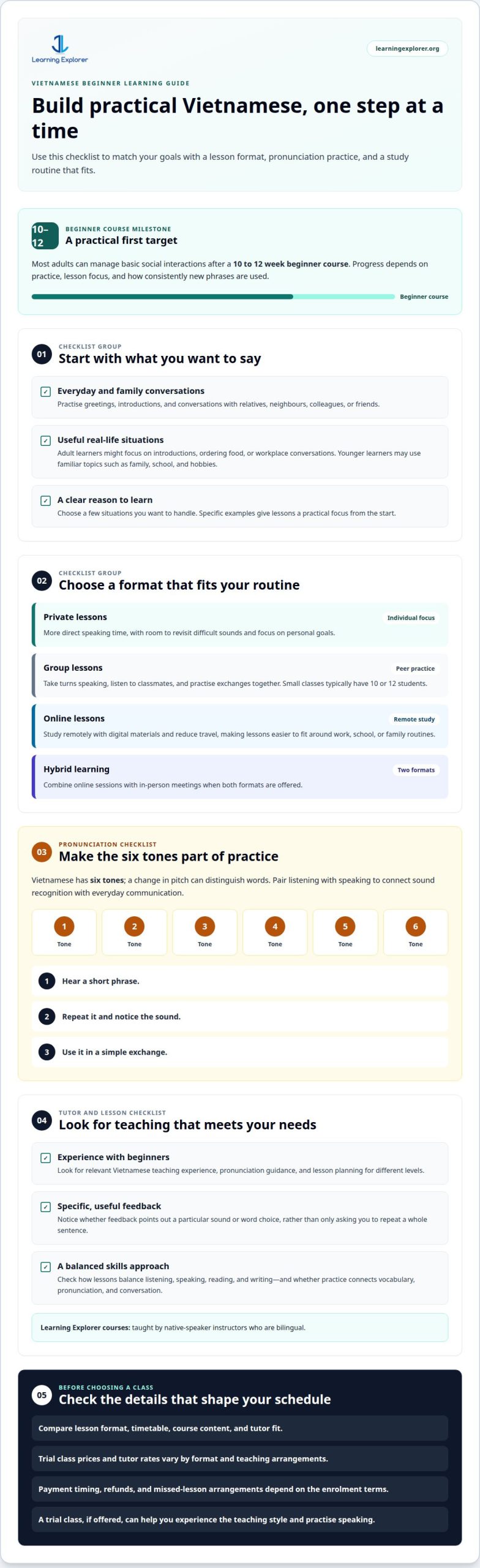
Vietnamese is more than a set of useful phrases: learning it can build everyday communication skills and deepen cultural understanding. A Vietnamese class for beginners in Yishun can guide learners from first phrases towards basic social interactions; most adults can manage these after a 10 to 12 week beginner course. Lessons also introduce the six tones that are essential to Vietnamese pronunciation.
Interested in Vietnamese but unsure where to begin? A new language can feel unfamiliar at first, especially when pronunciation and cultural context matter as much as vocabulary. A structured learning path helps you build confidence step by step and use what you learn in real conversations.
Explore what Vietnamese can help you do, how beginner and more advanced learning differ, and how to fit study into your schedule. You’ll also see how cultural context can connect pronunciation, language history, and everyday expressions, making your learning practical and meaningful.
Key Takeaways
- See how Vietnamese can support everyday communication while opening a window into cultural context.
- Compare private, group and online lesson formats to find a study approach that fits your routine.
- Learn what to look for in a tutor’s teaching experience and how lessons can adapt to your learning needs.
- Explore beginner and continuing course levels, plus the factors that shape a suitable study schedule.
- Discover how pronunciation practice, including Vietnamese’s six tones, can connect with cultural learning.
Why learn the Vietnamese language?
Vietnamese can help you connect with relatives, neighbours, colleagues, and friends. In Singapore, a learner might practise greetings before visiting Vietnamese-speaking family or joining a community event. A beginner course also offers a structured way to build speaking skills, rather than collecting phrases without context. For adults, basic social interactions may become manageable after a 10 to 12 week beginner course. Progress depends on practice, lesson focus, and how consistently learners use new phrases.
If you’re in Yishun and looking for a Vietnamese class for beginners, start by matching the course to your age and goals. Adult learners might practise introductions, ordering food, or workplace conversations. Younger learners may benefit from short activities about familiar topics such as family, school, and hobbies. Consider whether private, group, or online lessons best suit your learning needs.
Choose a format by considering how you learn best and where you can study. Private lessons give one learner more direct speaking time and room to revisit difficult sounds. Group classes add peer practice, such as taking turns introducing themselves. Online lessons can reduce travel and make it easier to fit study around work, school, or family routines. Hybrid learning combines online sessions with in-person meetings when both formats are offered.
- Private lessons: Focus on individual goals, such as pronunciation or family conversations.
- Group lessons: Practise listening and speaking through exchanges with classmates.
- Online lessons: Study remotely and use digital materials at a convenient time.
Vietnamese pronunciation is one reason guided practice can be useful. The language has six tones, so a change in pitch can distinguish words. Lessons can pair listening with speaking: hear a short phrase, repeat it, then use it in a simple exchange. Practise a greeting before adding a question about someone’s day, for example. This sequence connects sound recognition with everyday communication.
Before starting, decide what you want Vietnamese to help you do. Then compare lesson format, timetable, course content, and tutor fit. Trial class prices and tutor rates vary with lesson format and teaching arrangements, so no single figure applies across classes. Payment timing, refunds, and missed-lesson arrangements also depend on the stated enrolment terms. Review those terms before committing, especially if your work shifts or school calendar may change.
For a smooth start, identify your goal, choose a suitable lesson format, and settle on a realistic schedule. Use a trial class if one is offered to experience the teaching style and practise speaking. After enrolment, bring a short list of situations you want to handle, such as greeting relatives or ordering a meal. These examples give your first lessons a clear purpose.
Tutor profiles and teaching experience
A Vietnamese teacher can shape how you develop pronunciation, listening, and conversational skills. Look for clear teaching experience and an approach suited to your starting point.
Tutor Qualifications and Experience
Teacher profiles can help you understand who will guide your learning and how they work with beginners. Relevant experience may include teaching Vietnamese, correcting pronunciation, and planning lessons for different levels. Learning Explorer’s courses are taught by certified native-speaker instructors who are bilingual. This combination can support explanations of sounds and expressions, while bilingual teaching skills can make difficult points clearer.
Consider how a teacher turns experience into practical lessons. A beginner who struggles with tones, for example, may need focused listening practice before building longer sentences. A learner preparing to speak with relatives may benefit from role-play around introductions and family conversations. Look for examples of lesson activities, feedback methods, and how the teacher adjusts the pace to learners’ needs.
Teaching Approach and Language Skills
A useful teaching approach connects vocabulary, pronunciation, and speaking practice. A teacher might introduce a short exchange, model each line, and help learners use it in a new situation. This gives beginners a supported path from repeating phrases to forming their own responses. If conversation is your main goal, ask how the curriculum balances listening, speaking, reading, and writing.
Language skills matter beyond fluency. A bilingual teacher can explain a grammar point in familiar terms, then return learners to Vietnamese examples. For instance, a lesson on greetings can compare formal and casual expressions before paired practice. Notice whether feedback identifies a specific sound or word choice, rather than simply asking learners to repeat the whole sentence.
Class size also affects how much individual practice a learner receives. Small Vietnamese language classes typically have 10 or 12 students. In a group, learners can take turns speaking and hear different voices, while the teacher manages shared activities. Private instruction offers a more individual pace: tutors can adapt lessons to a learner’s pace and language needs. The right format depends on whether you value peer practice or more tailored attention.
For Vietnamese lessons as a beginner in Yishun, consider both the learning format and the teacher’s approach. Private lessons can focus closely on individual goals, while group lessons create opportunities to practise with classmates. Online classes can help when travel makes regular attendance difficult. Choose based on the support and practice you need, rather than location alone.
Reviews of Vietnamese classes and teachers near Yishun are most useful when they describe specific experiences. Look for comments about clear explanations, useful corrections, lesson structure, and speaking practice. A detailed account of a beginner’s experience offers more context than a general rating alone. Compare the feedback with your priorities, such as pronunciation support or conversational activities.
Before lessons begin, outline your goal and starting level. Then discuss how the tutor uses feedback, practice activities, and the curriculum to address that goal. If you want structured conversational practice, explore Vietnamese conversational learning as one way to build practical speaking skills.
Vietnamese course levels for beginners and beyond
A structured Vietnamese course can take you from essential phrases to more flexible conversation. In Singapore, choose a level by matching the lesson content to what you can already understand and say.
Beginner Course Duration
Most adults can manage basic Vietnamese social interactions after a 10 to 12 week beginner course. That estimate gives you a planning point, not a measure of every learner’s progress. Check how the course builds from greetings and introductions to short exchanges. A useful progression includes repeated speaking practice, listening tasks, and opportunities to revisit difficult material.
After foundational lessons, continued study can help you develop longer conversations and more confident responses. You might progress from introducing yourself to describing a routine or asking follow-up questions. A structured course should make the next step clear through its lesson aims and practice activities. Choose content that reflects your goals, whether they involve family conversations, travel, or daily interactions.
Beginner Course Fees
Course price depends on the learning format, lesson frequency, and course length, and is provided after a quote request. Private tuition and group study use different teaching arrangements, while online lessons can have different delivery needs. Compare what the course includes, such as learning materials, feedback, and opportunities to practise speaking, rather than judging by lesson duration alone.
Before enrolling, understand the payment schedule and terms for missed lessons or refunds. These conditions affect how a course fits around work, family, or school commitments. Consider the full course structure, not just the length of each lesson. A clear schedule helps you plan regular study and keep pace with the curriculum.
An online Vietnamese course can suit learners who need flexibility around life in Singapore. A structured lesson might introduce a short dialogue, practise key vocabulary, and build towards a speaking activity. Use online sessions to revisit sounds and phrases between lessons. Choose a course with clear learning aims, so each session connects to the skills developed earlier.
Assessment can help you see which skills are getting stronger and what needs more practice. Short speaking tasks, listening exercises, and written activities can show progress across different aspects of Vietnamese. A certificate is different: it records completion or achievement, while assessment gives feedback on learning. Before deciding, check what a course certificate represents and how progress is evaluated.
Set a goal, identify your current level, and compare the course content with that goal. A suitable beginner course should provide a clear route from first phrases to practical communication.
Standard and accelerated study schedules
A regular schedule gives you time to absorb lesson content between sessions. An accelerated plan brings lessons closer together, which may suit adults preparing for a particular conversation or trip. Either way, choose a pace that fits work, school, family, or university commitments. Regular attendance and short review activities help connect one class to the next.
Choose a regular pace if you need time to revisit vocabulary and practise speaking between lessons. An adult with changing work shifts, for example, might prefer a recurring session that leaves room for review. An accelerated schedule can concentrate learning into a shorter period, but calls for steady attention between classes. Consider your available study time, not only the number of lessons you hope to attend.
Online classes can make scheduling easier when travelling to a classroom is difficult. Before enrolling, identify the times you can reliably attend and share those options. Confirm the lesson format, session duration, and how you’ll receive joining details. Keep the booking information with your calendar entry, so a busy workday or school timetable doesn’t cause confusion.
An interactive online lesson can include listening, speaking, and guided practice. A teacher might introduce a short dialogue, then invite each learner to respond aloud. Adults balancing study and work can plan a brief review after class, using lesson notes or assigned practice. This connects online instruction with real conversations instead of treating each session as a standalone activity.
Scheduling also depends on how postponements are handled. Before lessons begin, clarify the notice period, whether a replacement session is offered, and how changes initiated by the teacher are communicated. These terms matter when a work shift changes or a school event affects attendance. A clear arrangement helps you and your teacher manage the calendar without confusion.
Use these steps to build a workable plan:
- Write down regular work, school, family, or university commitments.
- Choose lesson times that leave space for practice and review.
- Decide whether standard or accelerated pacing better matches your goal.
- Record the booking details and postponement terms alongside each class.
- Review the schedule after the first lessons and adjust future study blocks.
A regular or accelerated schedule should support consistent participation, not add pressure to an already full week. If an unexpected commitment interrupts a planned class, follow the agreed postponement process. For example, if your work roster changes, follow the stated notice steps and update your calendar. This keeps your learning plan organised while leaving room for everyday responsibilities.
Treat your schedule as part of your learning plan. A realistic routine makes it easier to communicate your availability, attend lessons, and practise Vietnamese between sessions.
Vietnamese language and cultural learning
Vietnamese culture is easier to understand when lessons connect words with context. Start with a useful exchange, then explore why its wording suits that situation. For example, practise a greeting and notice how the relationship between speakers can shape how they address each other. This approach helps you learn language for communication, not just recall isolated vocabulary.
Pronunciation connects language learning directly with meaning. Vietnamese has six tones, which learners can practise by listening, repeating, and comparing words aloud. A teacher can use a short listening exercise, then ask learners to use the words in a simple dialogue. This sequence makes learning more active and helps you hear distinctions instead of relying on memory alone.
The writing system also gives lessons a cultural and historical dimension. Quốc Ngữ, the Vietnamese Romanized script, was developed by 17th-century missionaries. Beginners can explore how familiar Roman letters represent Vietnamese sounds, then practise reading a short phrase aloud. Connecting script, sound, and meaning makes reading practice more purposeful than copying unfamiliar words without context.
Cultural learning can focus on everyday situations rather than broad generalisations. A lesson might compare how someone introduces themselves in a family setting and in a workplace conversation. Learners can discuss which expression fits each exchange, practise both versions, and ask what changes in tone or wording. This keeps cultural context specific and avoids treating every Vietnamese speaker or interaction as identical.
Build a personal learning plan around your preferences. Choose a practical goal, such as speaking with relatives, understanding a greeting, or ordering a meal. Then connect each class activity to that goal: learn relevant vocabulary, listen for pronunciation, and role-play the exchange. Academic study can support this practice, while conversational tasks help you apply new language in familiar situations.
Mastery develops through repeated use, not one memorable lesson. Conversational confidence in Vietnamese usually develops within six months of consistent practice. Use a simple routine after class: revisit a phrase, say it aloud, and use it in a new sentence. For example, adapt a greeting into a short introduction. Regular practice helps learners retain language while noticing cultural details more clearly.
For a richer learning experience, ask how lessons connect pronunciation, writing, and everyday communication. A structured activity can move from reading a phrase to discussing its context, then using it in conversation. This gives learners a clear path from language forms to meaningful interaction, with room for questions and individual preferences.
Explore conversational Vietnamese learning to connect language practice with cultural context and build more purposeful communication.
Learning Explorer: Conversational Vietnamese Course
Learning Explorer offers a Conversational Vietnamese Course for learners who want structured practice in everyday communication. It can suit beginners building a foundation or learners looking to develop more confident conversations. Bring a practical goal, such as greeting relatives, asking questions, or following a simple exchange, to help focus your learning.
Lessons can connect vocabulary and pronunciation with speaking practice, taking you from individual phrases to useful conversations. If you’re deciding whether Vietnamese fits your goals, consider the situations where you want to use it and the study routine you can maintain.
Contact Learning Explorer to discuss the Conversational Vietnamese Course and your learning goals.
Turn Your Vietnamese Goals Into a Learning Plan
Choose one conversation you’d like to handle more comfortably. It could be greeting a relative, introducing yourself, or joining a simple everyday exchange. Use that goal to shape your starting point and make practice relevant from the first lesson. A Vietnamese class for beginners in Yishun can be a practical way to start building those skills.
Learning Explorer offers a Conversational Vietnamese Course focused on everyday communication. If your language goals also include other settings, its Conversational English Course, Business English Course, and Conversational Mandarin Course provide further options. Start with the language and purpose that matter most to you, then build from there at a pace that fits your routine.
Contact Learning Explorer to enquire about the Conversational Vietnamese Course and discuss your learning goals. A clear first step can make a new language feel more approachable. Begin with the conversation you want to have, and keep moving forward one useful phrase at a time.
Frequently Asked Questions
How much does it cost?
Course fees vary according to language, proficiency level, and duration. When planning your budget, consider tuition alongside any registration or learning-material charges. If you’re choosing between group and individual instruction, compare the full course arrangement, not just the number of lessons. This helps you understand the commitment before enrolling.
Are there any exams?
The Conversational Vietnamese Course focuses on practical communication rather than a named examination pathway. You can practise introducing yourself, responding to questions, and following everyday exchanges. If you have an external exam goal, identify its required skills separately from your conversational aims. This helps you choose lessons that match what you want to accomplish, rather than assuming general conversation practice covers every exam task.
Do I get a certificate after completing the course?
Don’t assume a completion certificate is part of the course outcome. The practical value of conversational study is being able to use Vietnamese in relevant exchanges. Track your progress with examples such as a short self-introduction or a role-play response. If you need formal documentation for a particular purpose, raise that requirement as part of your course enquiry rather than treating a certificate as proof of fluency.
Are Vietnamese language classes for beginners available near Yishun, Singapore?
Learning Explorer offers a Conversational Vietnamese Course for beginners and other learners. A Vietnamese class for beginners in Yishun may suit residents seeking guided study close to home, while online lessons allow learners to join from the neighbourhood. In-person learning takes place at the centre at 10 Anson Road, level 22, International Plaza, Singapore 079903. Choose the format that best fits your travel needs and learning routine.
What are the schedules and locations for Vietnamese beginner classes?
Class arrangements depend on the learning format, so plan around times you can consistently attend. Online study lets Yishun learners take lessons remotely; in-person classes are held at Learning Explorer’s Singapore centre in the Central Business District. Decide whether travel or remote access better fits your routine. A stable lesson slot makes it easier to protect time for learning alongside work, family, or other commitments.
What are the course fees for Vietnamese beginner lessons in Yishun?
Fees vary according to language, proficiency level, and course duration. Tuition may also be accompanied by registration or material charges, so consider the full enrolment arrangement rather than tuition alone. Compare the overall structure of an online course with an in-person option to plan your budget without relying on a general estimate that may not match your course.
Should I choose group or private Vietnamese classes?
Group lessons let you practise exchanges with classmates, while private lessons focus more closely on your individual learning needs. In a group, you can practise taking turns and listening to different speakers. Private study may suit someone who wants to focus on a specific personal goal. Think about whether peer interaction or individual attention matters more, then choose the format that supports your preference.
Are Vietnamese beginner classes online or in person?
Learning Explorer offers online and physical classes. Online lessons are useful if you live in Yishun and prefer to avoid travelling for each session. In-person classes provide a classroom setting at the Singapore centre. Choose based on how you learn best, your travel routine, and the setting where you feel ready to practise speaking. Either way, select a format you can maintain consistently.